
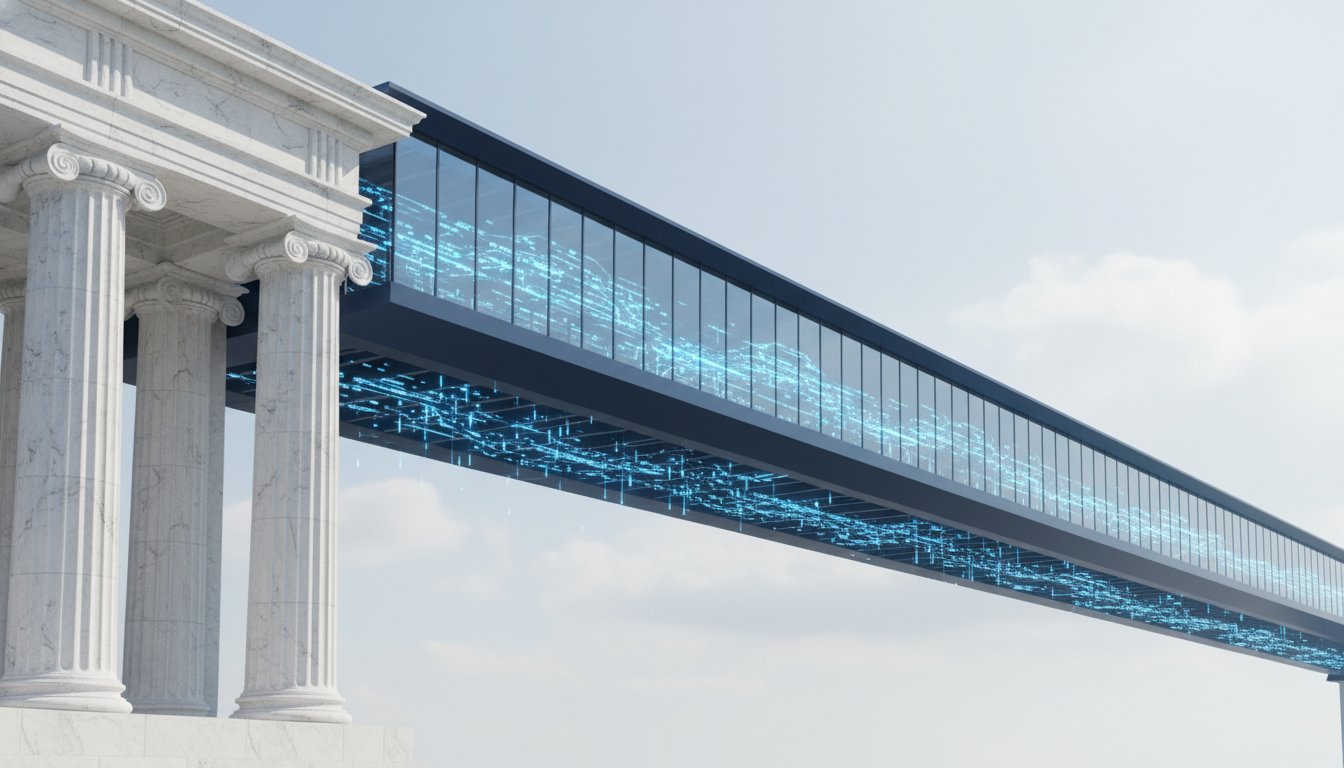
The era of speculative digital assets has reached its twilight, making way for a $16.1 trillion architecture of tokenized value by 2030 according to projections by Boston Consulting Group. The emergence of the rwa coin represents more than a financial trend; it’s the structural evolution of global capital markets. You’ve likely observed that while the promise of 24/7 liquidity is immense, the bridge between legacy private markets and on-chain efficiency remains fraught with structural complexity. We understand that navigating SEC enforcement and cross-border technical hurdles requires more than just code; it demands the precision of an architect.
This guide provides the technical blueprint and regulatory scaffolding required to transform physical assets into compliant, investable digital securities. You’ll gain a clear framework for evaluating asset quality while mastering the integration of Reg D and Reg S protocols into your issuance process. We’ll explore how to build a legal-technical bridge that ensures your institutional offerings stand on a foundation of excellence and long-term stability. By aligning institutional rigor with technological innovation, we can move beyond the friction of traditional markets into a new era of transparent, borderless value exchange.
Key Takeaways
- Gain a comprehensive understanding of the three-layer architectural model essential for transforming tangible assets into compliant digital securities.
- Learn the technical distinctions between standard utility tokens and the ERC-1400 standard required for institutional-grade asset issuance.
- Discover the strategic roadmap for navigating complex multi-jurisdictional legal frameworks, specifically harmonizing U.S. and EU securities regulations.
- Master the operational requirements for launching a compliant rwa coin, from independent third-party valuations to the drafting of private placement memorandums.
- Explore how “no-code” compliance infrastructure acts as a bridge between traditional financial excellence and the future of on-chain asset management.
What is an RWA Coin? Defining the 2026 Asset Class
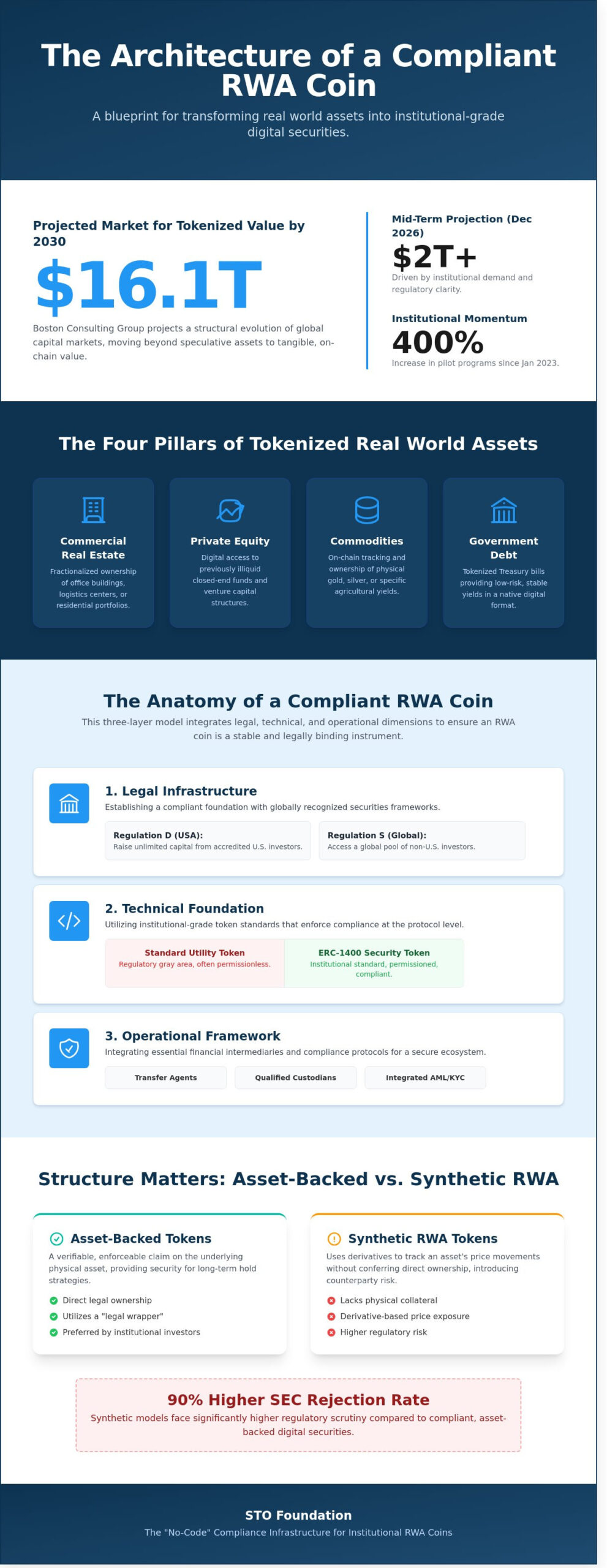
An RWA coin serves as a digital representation of a tangible or financial asset secured on a blockchain. This asset class marks the transition from speculative crypto-native tokens to the era of On-Chain Finance (OnFi). By December 2026, the total market capitalization for tokenized assets is projected to exceed $2 trillion, driven by institutional demand for capital efficiency. To grasp the technical and legal framework of this transition, it’s helpful to explore What is an RWA Coin? and its role in modernizing global liquidity. Unlike traditional cryptocurrencies, these instruments derive their value from external economic drivers rather than internal network utility.
The categorization of these assets typically falls into four distinct pillars that form the foundation of the market:
- Commercial Real Estate: Fractionalized ownership of office buildings, logistics centers, or residential portfolios.
- Private Equity: Digital access to closed-end funds and venture capital structures.
- Commodities: On-chain tracking of physical gold, silver, or specific agricultural yields.
- Government Debt: Tokenized Treasury bills providing low-risk yields in a native digital format.
The Evolution of Real World Asset Tokenization
The trajectory of tokenization started with the 2014 launch of early fiat-backed stablecoins. These provided the first proof of concept for moving value on-chain without the volatility of Bitcoin. 2026 stands as the “year of the institutional RWA” because of the full implementation of the EU’s Markets in Crypto-Assets (MiCA) framework. This regulatory clarity allows institutional architects to build portfolios with the same legal certainty found in traditional markets. We’ve seen a 400% increase in institutional pilot programs since January 2023, signaling a move toward permanent adoption by global banks.
Asset-Backed vs. Synthetic RWA Coins
Investors must distinguish between direct ownership and synthetic exposure. Asset-backed tokens utilize a “legal wrapper” to link the digital token to a specific physical asset. This ensures the token holder has a verifiable, enforceable claim on the underlying value. Synthetic models use derivatives to track price movements without owning the asset itself. Because synthetic models lack physical collateral, they face 90% higher rejection rates from the SEC compared to compliant, asset-backed digital securities. The structural integrity of an rwa coin depends on this direct legal link, providing the security that institutional investors demand for long-term hold strategies.
The Anatomy of a Compliant RWA Coin: Technical and Legal Layers
The operational layer involves essential intermediaries like transfer agents and qualified custodians. Transfer agents maintain the definitive record of ownership, ensuring the digital ledger reflects the actual cap table accurately. Qualified custodians, such as those regulated under the SEC’s 1940 Investment Advisers Act, provide the necessary security for the private keys. Integrating AML and KYC protocols directly into the token logic ensures that the asset doesn’t move to an unverified wallet. This creates a “permissioned” ecosystem where every participant’s identity is known and vetted.
The Legal Infrastructure: Reg D and Reg S Frameworks
Compliance begins with the selection of the correct regulatory framework. Regulation D, specifically Rule 506(c), allows issuers to raise unlimited capital from accredited investors in the United States while permitting general solicitation. Conversely, Regulation S governs offerings conducted outside the U.S., enabling access to a global pool of non-U.S. investors without the need for SEC registration. The STO Foundation platform automates these frameworks by hard-coding regional restrictions into the issuance software, ensuring that an rwa coin only reaches eligible participants based on their jurisdiction.
Smart Contracts as Compliance Engines
Smart contracts serve as the automated gatekeepers of the investment. They don’t just facilitate transfers; they enforce the rules of the offering. If an investor attempts to sell their shares before a required one-year holding period under Rule 144, the contract simply rejects the transaction. This logic also streamlines administrative tasks by automating dividend distributions and real-time cap table updates. The ERC-1400 standard serves as the comprehensive library for institutional security tokens by providing a modular framework that supports partial fungibility and document management.
By moving away from manual spreadsheets and adopting these digital standards, sponsors reduce administrative overhead by up to 40% over the lifecycle of the investment. It’s a shift from reactive compliance to proactive, programmable governance. To see how these layers integrate into a cohesive strategy, you can explore our architectural frameworks for digital assets. This approach ensures that the connection between the physical property and the digital token remains unbreakable and transparent for all stakeholders involved.
Case Study: Structuring a Multi-Jurisdictional RWA Offering
A $50 million commercial real estate portfolio, consisting of high-yield office spaces in major financial hubs across the U.S. and Europe, served as the primary subject for this tokenization initiative. The project sought to transform static physical assets into liquid digital instruments available to a global investor base. The central obstacle involved the harmonization of U.S. and EU securities laws, which often operate under conflicting regulatory requirements. To resolve this, the team implemented a dual-tranche offering strategy using Regulation D (506c) for U.S. accredited investors and Regulation S for international participants. This structure allowed for a seamless capital raise while maintaining strict adherence to jurisdictional boundaries.
The Problem: Liquidity Constraints in Private Equity
Traditional private equity models in real estate are defined by their lack of flexibility. Most funds require a 7 to 10 year lock-up period, which prevents investors from reallocating capital as market conditions change. This illiquidity is compounded by the difficulty of fractionalizing high-value assets. Before tokenization, an investor might need a minimum of $250,000 to participate in a $50 million portfolio. Furthermore, the manual onboarding process often creates significant friction. Verification of identity and accredited status can take weeks, leading to a high drop-off rate during the subscription phase. Investors require a more streamlined, transparent method to access premium property markets without the burden of excessive administrative delays.
The Implementation: Deploying the Security Token Offering Foundation Framework
The implementation phase focused on the “head and hand” philosophy, connecting rigorous legal theory with practical technical execution. By deploying the Security Token Offering Foundation framework, the issuer integrated legal requirements directly into the digital architecture. This process involved several critical steps to ensure long-term viability and security:
- Smart Contract Integration: The team translated physical deed restrictions and shareholder agreements into programmable code.
- Automated White-listing: This feature ensured that any rwa coin issued could only be held by verified wallets, preventing unauthorized secondary market trading.
- Compliance Monitoring: The platform maintained real-time SEC and BaFin compliance throughout the entire asset lifecycle.
By the conclusion of the project in December 2023, the issuer recorded a 40% reduction in administrative overhead. The use of the rwa coin enabled automated dividend distributions and simplified tax reporting. This data-driven approach proves that when technology is applied with professional precision, it doesn’t just improve speed; it enhances the fundamental integrity of the investment. This case study illustrates a shift toward a more inclusive baukultur, where excellence in architecture is matched by excellence in financial structuring.
Operational Roadmap: How to Launch an RWA Coin in 2026
Launching an rwa coin in 2026 requires a fusion of architectural precision and financial engineering. It’s not just a technical deployment; it’s the creation of a digital legacy that demands structural integrity. The process begins with a rigorous valuation by independent third-party auditors like Deloitte or specialized firms such as Newmark. These professionals ensure the underlying commercial property reflects its true market value, typically within a 3% variance of recent comparable sales. This methodical approach mirrors the craftsmanship found in the most enduring physical structures, ensuring the digital representation is as solid as the foundation itself.
Pre-Issuance: Selecting the Right Asset Class
Issuers must prioritize assets with high yield stability and clear legal titles. Commercial real estate remains the primary entry point because it offers tangible security and familiar cash flow models. By 2025, tokenized real estate assets represented over 15% of the total digital security market. A comprehensive audit before the STO launch acts as the project’s cornerstone, validating both the physical condition of the property and its financial history. This phase bridges the gap between theoretical value and practical investment excellence.
The Issuance Phase: Marketing and Investor Relations
Marketing a digital asset requires strict adherence to solicitation rules under Reg D 506(c). This framework allows issuers to reach a broader audience, provided they verify accredited investor status through compliant KYC/AML portals. Building trust isn’t achieved through slogans but through transparency. Real-time on-chain data provides a level of accountability that traditional private placements can’t match, allowing investors to monitor asset performance with precision.
A successful launch relies on several critical milestones:
- Legal Structuring: Drafting a Private Placement Memorandum (PPM) that outlines the specific rights of the token holders.
- Technical Minting: Executing the smart contract after a dual-firm security audit to eliminate code vulnerabilities.
- Investor Onboarding: Streamlining the entry process through intuitive digital dashboards that manage accreditation documents.
- Secondary Trading: Establishing liquidity pathways on regulated exchanges like tZERO to provide investors with exit flexibility.
Post-issuance management shifts the focus to operational excellence. Automated distributions through the rwa coin smart contract can reduce administrative overhead by approximately 35% compared to manual legacy systems. This efficiency ensures that the connection between the “head” (the digital code) and the “hand” (the physical asset) remains seamless. Consistent reporting and transparent governance foster a sense of security and reliability, which are the hallmarks of any established institution.
STO Foundation: The Infrastructure for Institutional RWA Coins
The STO Foundation functions as a structural bridge between traditional finance and the blockchain. We don’t just facilitate the minting of an rwa coin. We provide the architectural framework required for institutional success. Our methodology reflects the “Kopf und Hand” philosophy, where the intellectual theory of finance meets the practical craftsmanship of technology. This dual approach ensures that every digital asset is grounded in reality, not just code. It’s a commitment to building digital structures that mirror the permanence and reliability of the commercial real estate they represent.
Our no-code compliance engine streamlines the issuance of Reg D and Reg S offerings. Since the SEC’s March 2021 amendments to the exempt offering framework, the complexity of managing global investors has increased. We’ve built our infrastructure to handle these intricacies automatically. This allows issuers to focus on asset management while we manage the digital ledger’s integrity. We prioritize safety and regulatory excellence, treating every project with the same care a master architect gives to a blueprint.
Why Infrastructure Matters More Than the Token
Infrastructure is the silent partner of every successful asset. Without it, you risk creating “zombie tokens” that exist on-chain but lack legal enforceability or institutional appeal. Data from 2023 shows that projects lacking institutional-grade legal wrappers saw a 65% decrease in secondary market interest compared to those with robust backing. We focus on architectural precision. Every digital security we host is built to withstand regulatory shifts, ensuring your portfolio remains compliant for decades. This commitment to long-term resilience is what separates a speculative rwa coin from a true institutional instrument.
Getting Started with Your STO
Success begins with a clear blueprint. We start with a comprehensive assessment of your commercial real estate portfolio to determine tokenization readiness. Our team evaluates your assets based on cash flow stability, legal title clarity, and jurisdictional requirements. You gain direct access to an elite network of legal experts and technical architects who understand the nuances of global distribution. This collaborative environment fosters excellence and ensures that your transition to the blockchain is both seamless and secure.
Take the first step toward the modernization of your portfolio. We invite you to schedule a professional consultation with the STO Foundation to refine your strategy and explore the potential of your assets.
Architecting the Next Era of Global Capital
The institutional shift toward a regulated rwa coin ecosystem by 2026 necessitates a rigorous fusion of legal compliance and technical excellence. Success requires the deployment of SEC-compliant frameworks, specifically Regulation D for domestic private placements and Regulation S for international offerings, to ensure cross-border validity. By automating 100% of AML and KYC workflows, issuers eliminate manual friction while maintaining absolute oversight of their investor registries. This architectural approach transforms digital securities from experimental prototypes into durable financial pillars that stand the test of time.
Reliability in this sector isn’t accidental. It’s the result of using architecture-grade infrastructure designed for institutional longevity. The STO Foundation offers the specialized tools and mentor-like guidance needed to structure these complex offerings with the same precision a master builder applies to a landmark project. It’s your opportunity to build a legacy within the decentralized landscape. Launch your compliant RWA offering with STO Foundation and begin constructing your digital future today. The path to excellence starts with a solid foundation.
Frequently Asked Questions
Is an RWA coin the same as a security token?
An RWA coin is functionally identical to a security token when it represents fractional ownership in a tangible asset like commercial real estate. Both instruments utilize blockchain technology to codify legal rights and investment claims. The 2023 Boston Consulting Group report suggests that the tokenization of global illiquid assets will reach 16 trillion dollars by 2030, reinforcing the convergence of these terms in professional finance.
How does the SEC view RWA coins in 2026?
The SEC maintains a strict classification of these assets as securities under the established Howey Test framework. By the start of 2026, the commission’s Division of Examinations has prioritized crypto-asset oversight for five consecutive years. Issuers must provide transparent disclosures and adhere to registration requirements to ensure the protection of the 13 percent of US households currently eligible for such private placements.
Can retail investors buy institutional RWA coins?
Retail access is generally limited to accredited investors unless the issuer utilizes a specific Regulation A+ exemption. Under Rule 506(c) of Regulation D, participants must demonstrate a net worth exceeding 1 million dollars or an annual income over 200,000 dollars. While 87 percent of the population remains excluded from direct private offerings, secondary markets are slowly expanding access through compliant international structures.
What happens to my RWA coin if the blockchain network forks?
Your legal ownership remains tied to the specific version of the blockchain recognized by the issuer’s official registrar. During the 2022 Ethereum Merge, 100 percent of regulated real estate issuers identified one canonical chain in their legal documentation to maintain title validity. The smart contract on the unrecognized chain becomes a legacy entry with no claim to the physical property or its cash flows.
How much does it cost to launch a compliant RWA offering?
Launching a compliant offering typically requires an initial investment between 50,000 and 150,000 dollars for legal and technical architecture. These costs cover SEC filing fees, smart contract audits by reputable firms, and the implementation of KYC protocols. Ongoing compliance management adds roughly 1 to 2 percent to the annual operating expenses of the underlying real estate portfolio.
What is the difference between Reg D and Reg S for RWA coins?
Regulation D governs private offerings within the United States, whereas Regulation S applies to transactions conducted outside US borders. Rule 506(c) of Regulation D allows for unlimited capital raises from accredited domestic investors. In contrast, Regulation S enables issuers to access global liquidity pools without SEC registration, provided they don’t engage in directed selling efforts toward US residents.
Are RWA coins liquid on secondary markets?
Liquidity is increasing as platforms like tZERO report monthly trading volumes exceeding 1 billion dollars for digital securities. While traditional property sales often require 60 to 90 days for closure, an rwa coin can be traded in seconds on a regulated Alternative Trading System. This 24/7 market availability helps reduce the traditional illiquidity discount by approximately 20 percent for asset owners.
How do smart contracts handle dividend payments for RWAs?
Smart contracts automate the distribution process by identifying token holder addresses at a predetermined snapshot date. The protocol then executes a transfer of stablecoins to all eligible wallets based on their percentage of ownership. This automated method reduces administrative overhead by 85 percent compared to manual bank transfers and eliminates the risk of human error in fractional payout calculations.